


- Home&Garden

- Home Improvement
7 Designer-Approved Tips for Perfectly Arranging Your Living Room
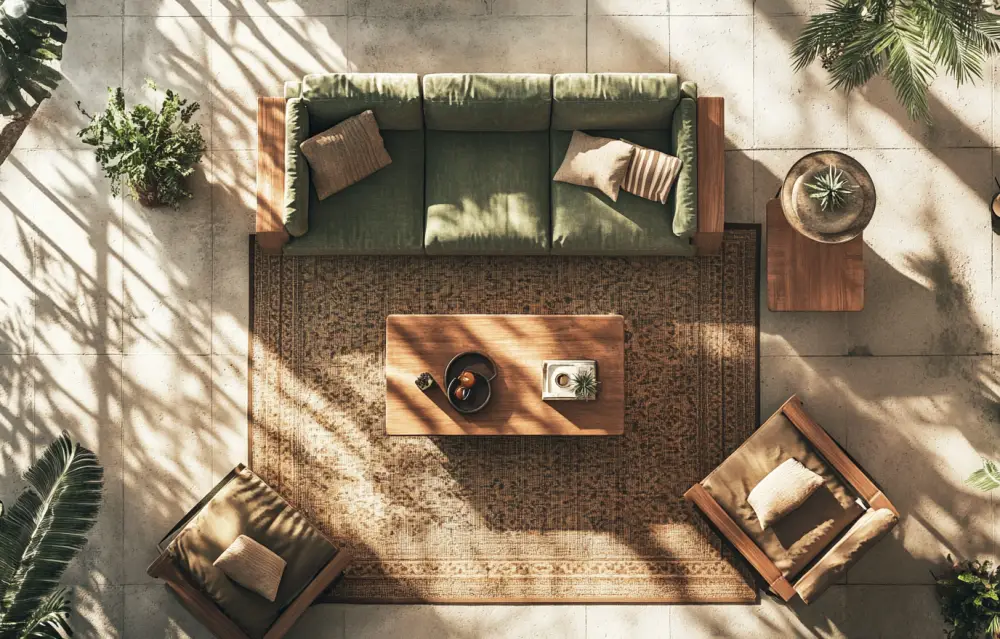
The center of any house is the living room. This area is a haven for rest, enjoyment, and even productivity, whether you're spending time alone, entertaining a huge, multigenerational family, or something else entirely. Naturally, the main goal is to create a living space that is both comfortable and fashionable.
Nevertheless, selecting the appropriate pieces and setting up furniture can feel intimidating. Are there certain rules when it comes to living room design? Regardless of the size or shape of your area, how can you maximize it? Inspired by professional interior designers, here are four fundamental guidelines (plus a few more pointers) for living room arrangement.
Choose a focal point first
Establishing a focal point as your anchor is essential before you start organizing your living space. Everything else in the space should work in harmony with and center on this focal point, whether it's a treasured family artifact, a TV, or a warm fireplace.
Examine the room's architectural elements carefully if you're not sure what to choose as your focal point. Does it have built-in shelving, a beautiful archway, or a spectacular fireplace? These organic components frequently offer the ideal foundation for your design.
Think About Where to Put Your Rug
After deciding on your focal point, consider where to place your rug because it serves as an anchor for the overall design of the space. An 8 by 10 foot rug is a good fit for the majority of rooms that are typical in size. A foot or so of the floor should ideally be visible around the room's perimeter. If you're not sure of the rug's size, you can mark it out on the floor with painter's tape. For comfort and stability, don't forget to include a rug cushion.
Observe the 2:3 Rule
Given that the sofa is undoubtedly the most important piece of furniture in the living room, its size must be carefully considered. When choosing a sofa size, interior designer Tamara Honey advises using the 2:3 ratio. "Your sofa should be about two-thirds the size of your room," she states.
You may need to deviate from this rule, though, if your living room doubles as a dining room or home office. "When designing multipurpose areas, follow your gut and balance aesthetics and functionality, even if it means deviating from rules," suggests Honey.
Make Room for Your Sofa
Although it's generally not a good idea to put your sofa right up against the wall, this guideline might be difficult to follow in flats or smaller rooms. "Furniture should float a few inches away from the walls, especially when it impacts access to drapery or shade hardware," Honey advises. Making a comfortable conversation pit with 36 to 42 inches behind the sofa for foot movement is a terrific idea. Designing a living space that complements the arrangement of your house is the aim.
Maintaining a certain amount of space between furniture and heat sources is important to prevent fire threats in older homes with radiators or heating vents.
Think About Versatility
Using multipurpose furniture, such as a modular sofa, can be a game-changer in larger houses or if you host visitors often. "Modular seating offers flexibility in configurations and can be rearranged or separated as needed," Younis states. Because of its versatility, it's simple to switch up your area for various events or when you want a fresh style.
Take Measurements Before Buying
Making ensuring everything fits together is crucial when arranging a living room, which is similar to assembling a puzzle. Start by measuring the wall where you want to put a three-seater sofa and two side tables, for instance. Make sure there is adequate room for simple mobility by leaving a few inches between each component and the wall. To ensure that everything will fit before the furniture arrives, use painter's tape to sketch the plan on the floor using a tape measure.
A single size does not fit everyone
It may be enjoyable to rearrange furniture for hours, but keep in mind that a room should represent your lifestyle just as much as your own flair. Younis cautions against adopting a one-size-fits-all approach. "Every living room has a different layout. The design should be influenced by how you use the area. Depending on your needs, give comfort and functionality first priority and allow it to influence your design.
Utilize an App to Aid in Visualization
To help you imagine your living room once you have a broad concept of how you want it to look, think about installing a layout program like Planner 3D. It enables you to design a digital representation of your space, improving your understanding of how furnishings and accent pieces will blend in. It's important to keep in mind that Spoak is a desktop-only application, but it's still a fantastic way to try out various setups.
Strive for Equilibrium
Don't put all of your furnishings in one area of the space. You can identify any design imbalances in the space by using a layout planner. You can make layout adjustments before settling on a final arrangement by using a digital space visualization tool to determine where items could be crowded or where additional pieces are needed.
 Top Headlines